Author: admin_willar

  • Newsletter #2 – April 2026

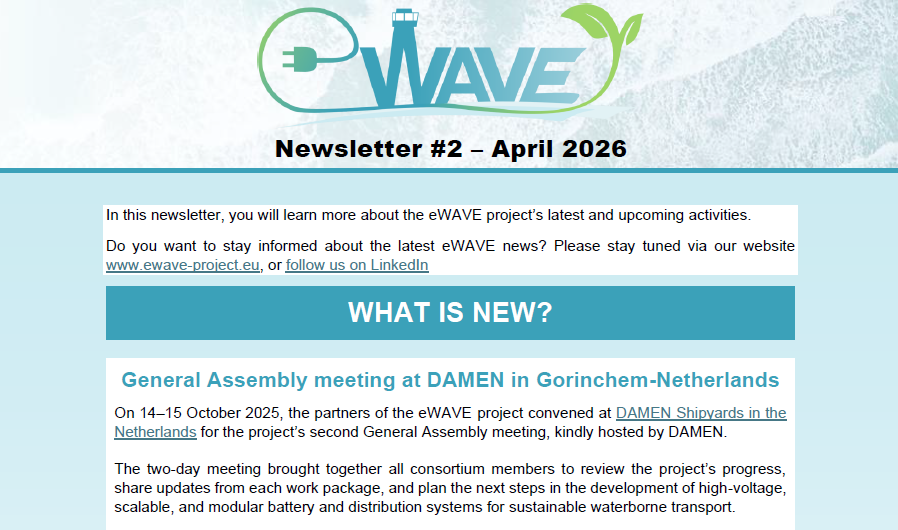
    Newsletter #2 – April 2026

    Our second newsletter is published. In this newsletter, you will learn more about the latest activities and the activities to come. Please download the newsletter here, or subscribe to our newsletter on our contact page

  • eWAVE on stage at Key Expo 2026 in Rimini!

    eWAVE on stage at Key Expo 2026 in Rimini!

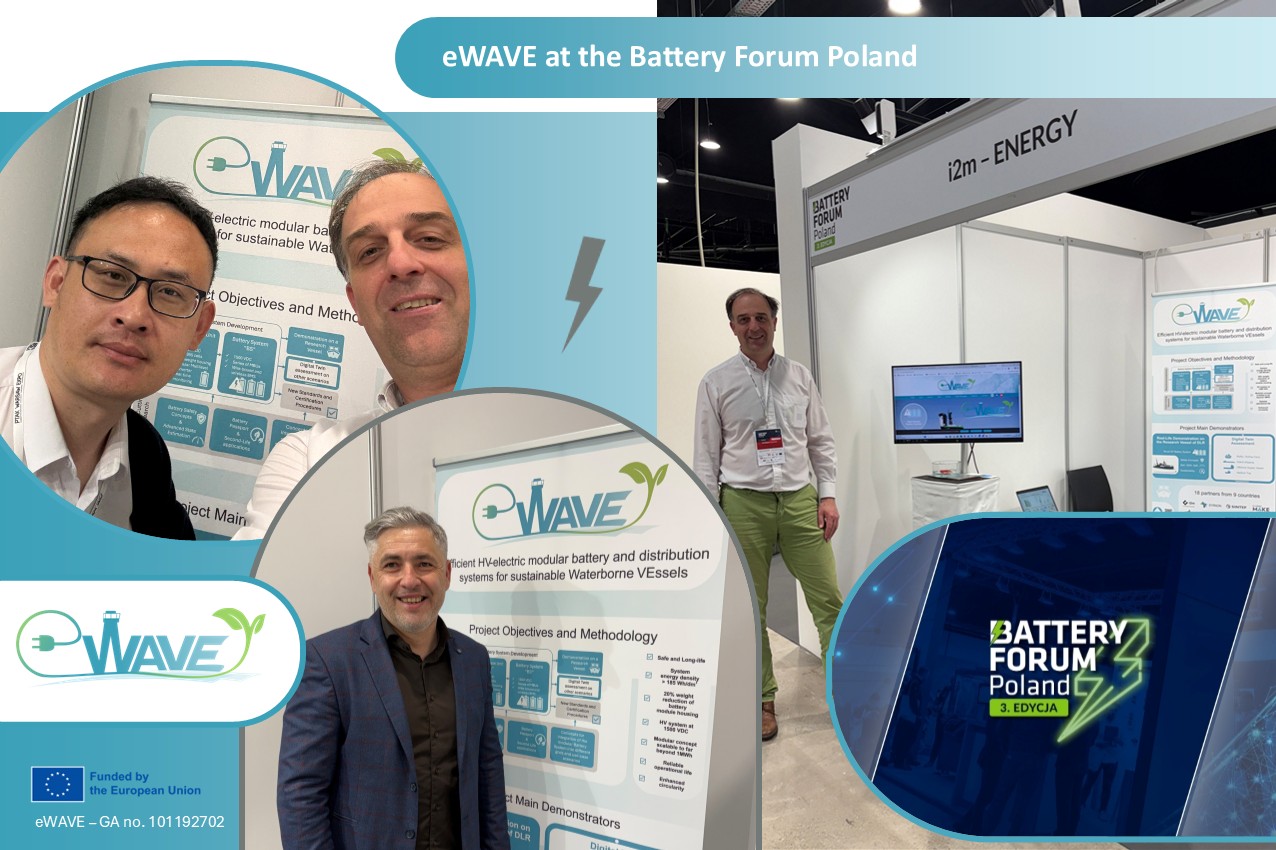
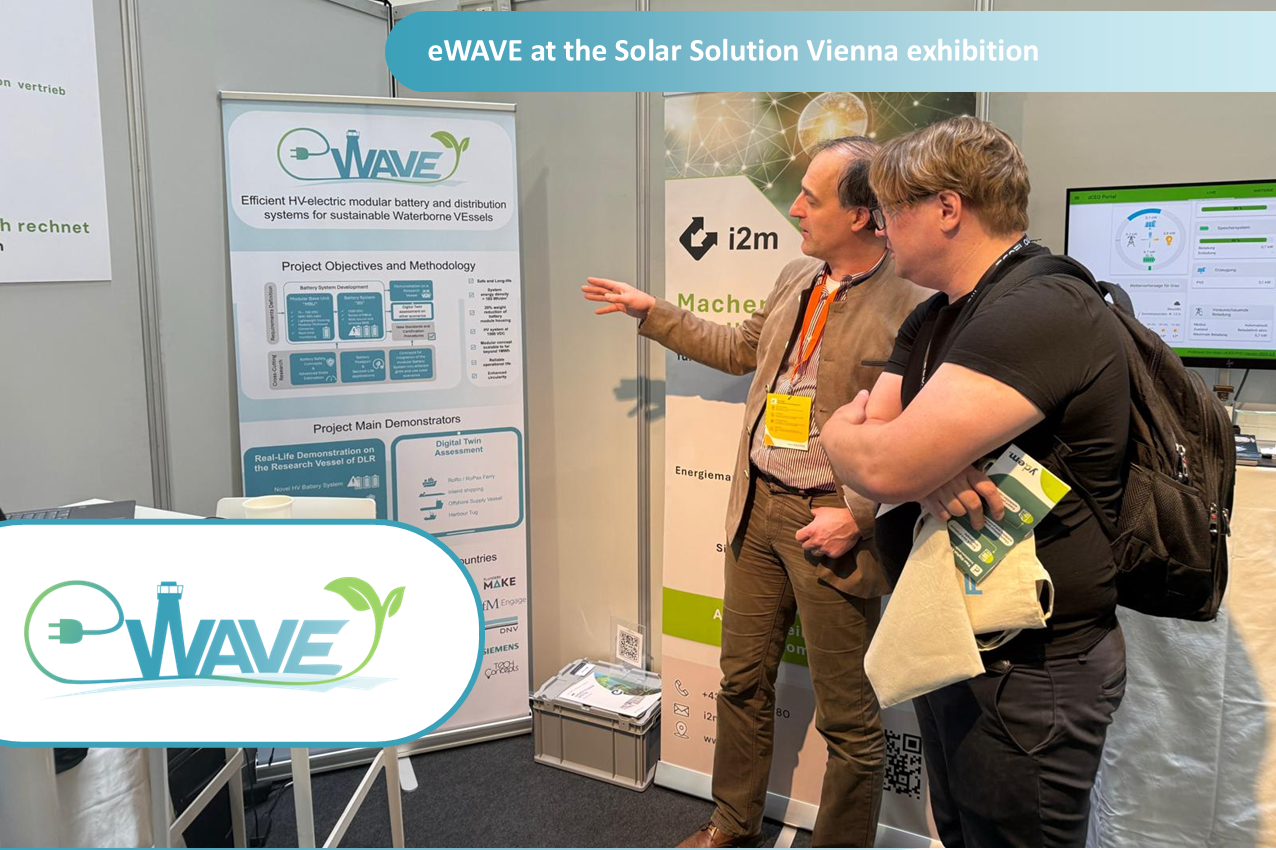
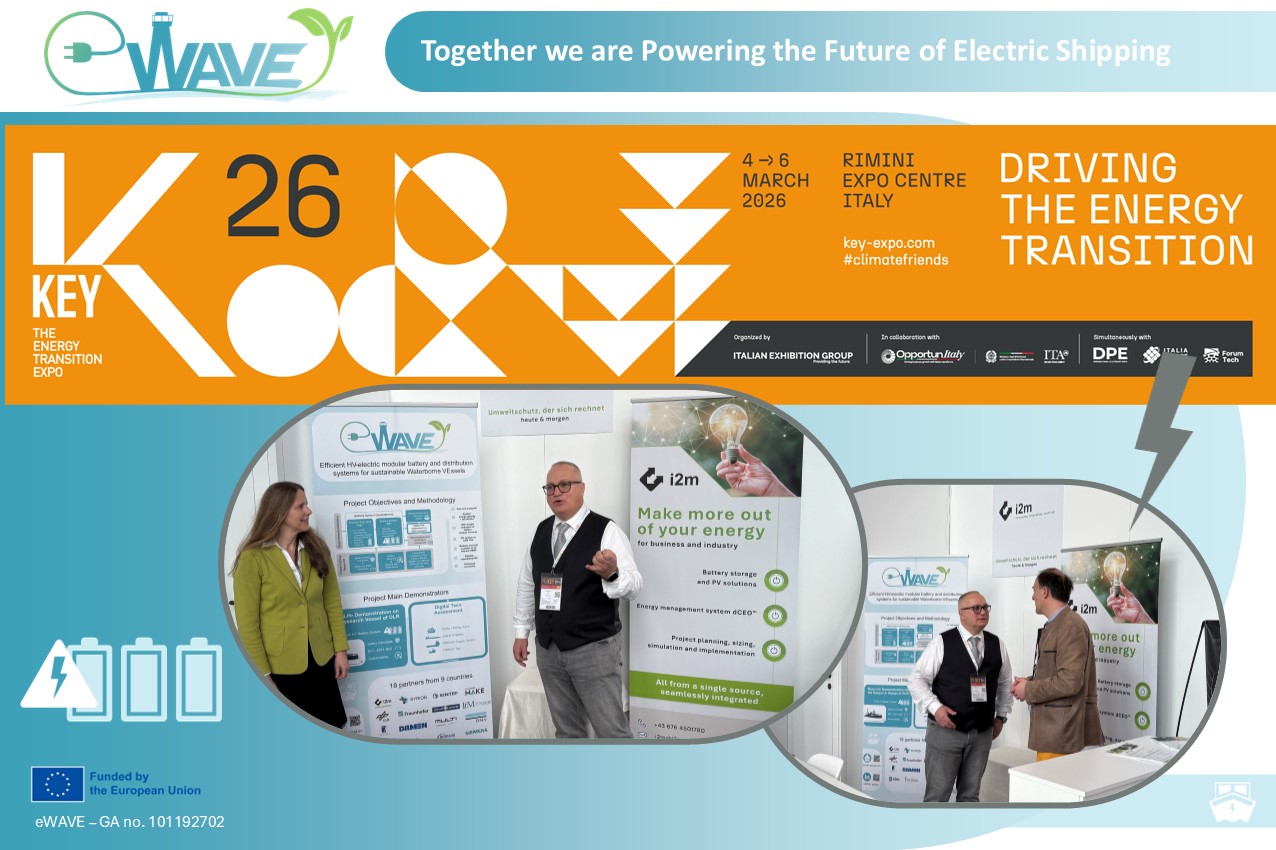
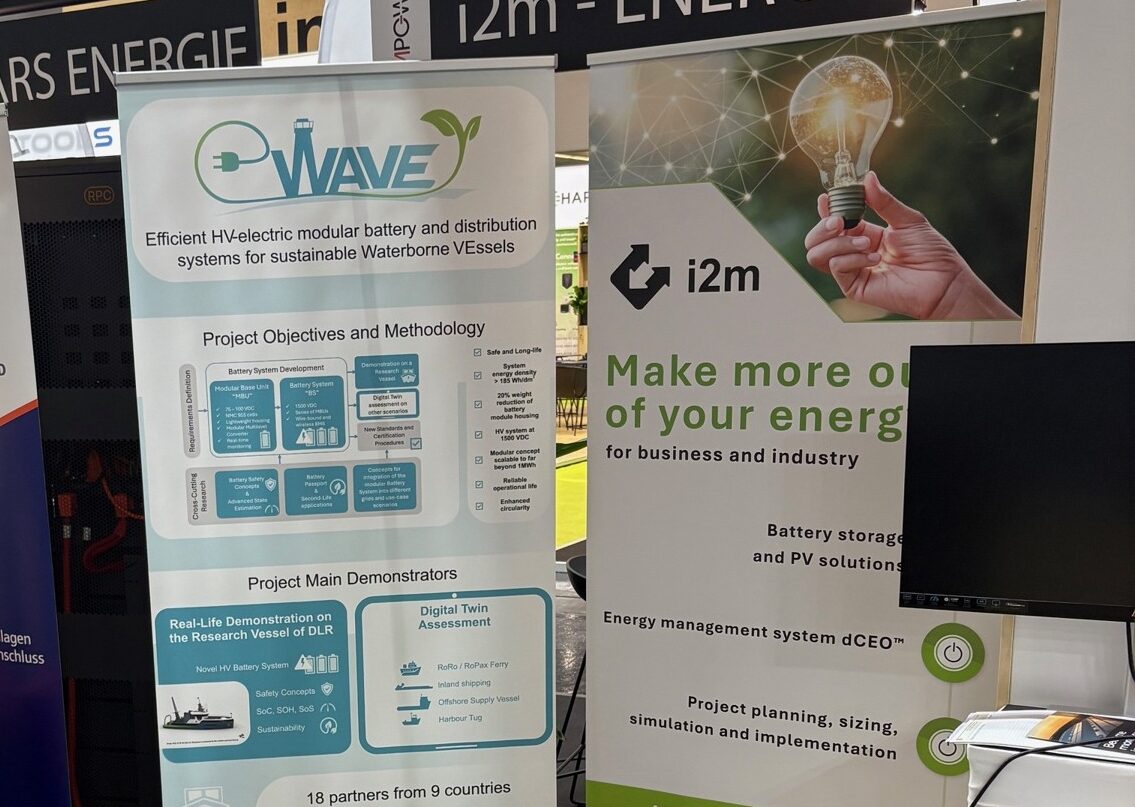
    eWAVE project was disseminated at the “KEY – The Energy Transition Expo 2026” at the stand of the project partner i2m on 4-6 March 2026.

    KEY is the leading international trade fair dedicated to technologies, services, and solutions supporting the global shift to sustainable energy.

    At the stand, we had valuable discussions with inspiring peers including Dr. Luca Bono, key researcher at ENEA (Italian National Agency for New Technologies, Energy and Sustainable Economic Development) on the topic “Novel high-performance battery cells using organic cells separation materials”.

  • Exchange event with BatteryPass-Ready organized by SYRION

    Exchange event with BatteryPass-Ready organized by SYRION

    BatteryPass-Ready: Data Attributes and Test Infrastructure for the EU Digital Battery Passport

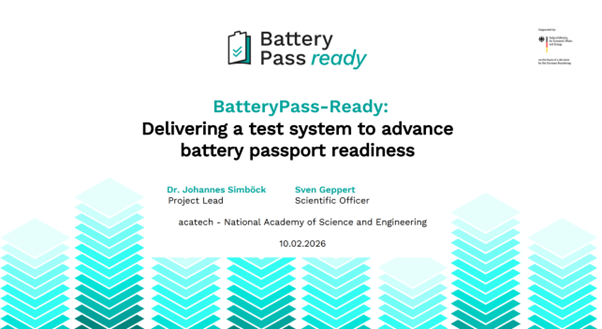
    At an exchange event organized by eWAVE partner SYRION, Dr. Johannes Simböck (Project Lead) and Sven Geppert (Scientific Officer) from acatech, National Academy of Science and Engineering in Germany, presented key results of the former BatteryPass project and the current status of the BatteryPass-Ready project on 10 February 2026. There was an extremely high level of interest in this event from the eWAVE partner consortium, which also contributed actively to the relevant Q&A and discussion session.

    The EU Digital Battery Passport

    The Digital Battery Passport (DBP) is set to become mandatory from 18 February 2027 for all electric vehicle (EV) batteries, light means of transport (LMT) batteries, and industrial batteries above 2 kWh (including shipping batteries) that are brought to market in Europe. As a pioneering digital product passport within the EU, the DBP aims to drive digitalization across B2B, B2C, and public-sector interactions, support the transition to a circular economy and promote transparent, sustainable value chains.

    The BatteryPass-Ready project

    BatteryPass-Ready (https://thebatterypass.eu/) is a Germany-based, pre-competitive project that evolved from the earlier Battery Pass consortium. It will run from April 2025 to March 2027. Led by Fraunhofer IPK, together with acatech, GEFEG, and TU Berlin, and backed by over 100 supporting partners, including SYRION, the project is funded by the German Federal Ministry for Economic Affairs and Energy. Its core mission is to deliver a publicly available test environment that will enable industry and SMEs to verify their battery passport systems before the regulatory deadline.

    Test Development Methodology and Data attributes for the EU Digital Battery Passport

    The first part of the presentation by S. Simböck introduced the test development methodology, which follows a five-step process: requirements analysis, user stories, test scenarios, failure scenarios, and test procedures. This process covers the entire lifecycle of a battery passport, from initial market placement through repair, and recycling.

    The second part of the presentation by S. Geppert focused on the data side, with the team using DIN DKE Spec 99100 as a starting point for defining battery passport data attributes. These attributes cover categories such as carbon footprint, materials and composition, circularity, performance and durability, and supply chain due diligence. A key ongoing challenge is keeping pace with the rapidly evolving regulatory and standardization landscape, including delegated acts under the Battery Regulation (BattReg) and the DPP standardization work of CEN/CENELEC JTC-24, which is expected to deliver technical standards by summer 2026. The latest list of data attributes, based on the current standardization work, was just recently published in March 2026 (https://thebatterypass.eu/news/now-published-data-attribute-longlist-v1-3/).

    Looking further ahead, the first prototype for the test environment has been developed and initial tests implemented. According to J. Simböck and S. Geppert, the test environment is planned to be publicly available by June 2026, with iterative optimization based on early user feedback to follow.

    eWAVE – Towards a Digital Battery Passport for Maritime Applications

    Unlike the automotive industry, there has been relatively little focus on developing a passport for maritime applications for some time, but this has been changing significantly over the past few months.

    eWAVE aims to develop the foundations of a ‘Digital Battery Passport’ (DBP) specifically for martime batteries, building on initiatives such as the German ‘BatteryPass’ and ‘BatteryPass-Ready’ projects whilst focusing on the specific requirements of the maritime sector. This is being carried out in close consultation and collaboration with the ‘Battery Passports for Maritime Batteries’ working group of the Maritime Battery Forum (MBF), which was established in early 2026, with SYRION acting as the central interface between the MBF and eWAVE.

  • Safety Status of Lithium-Ion Batteries: From Automotive Research to Maritime Applications

    Safety Status of Lithium-Ion Batteries: From Automotive Research to Maritime Applications

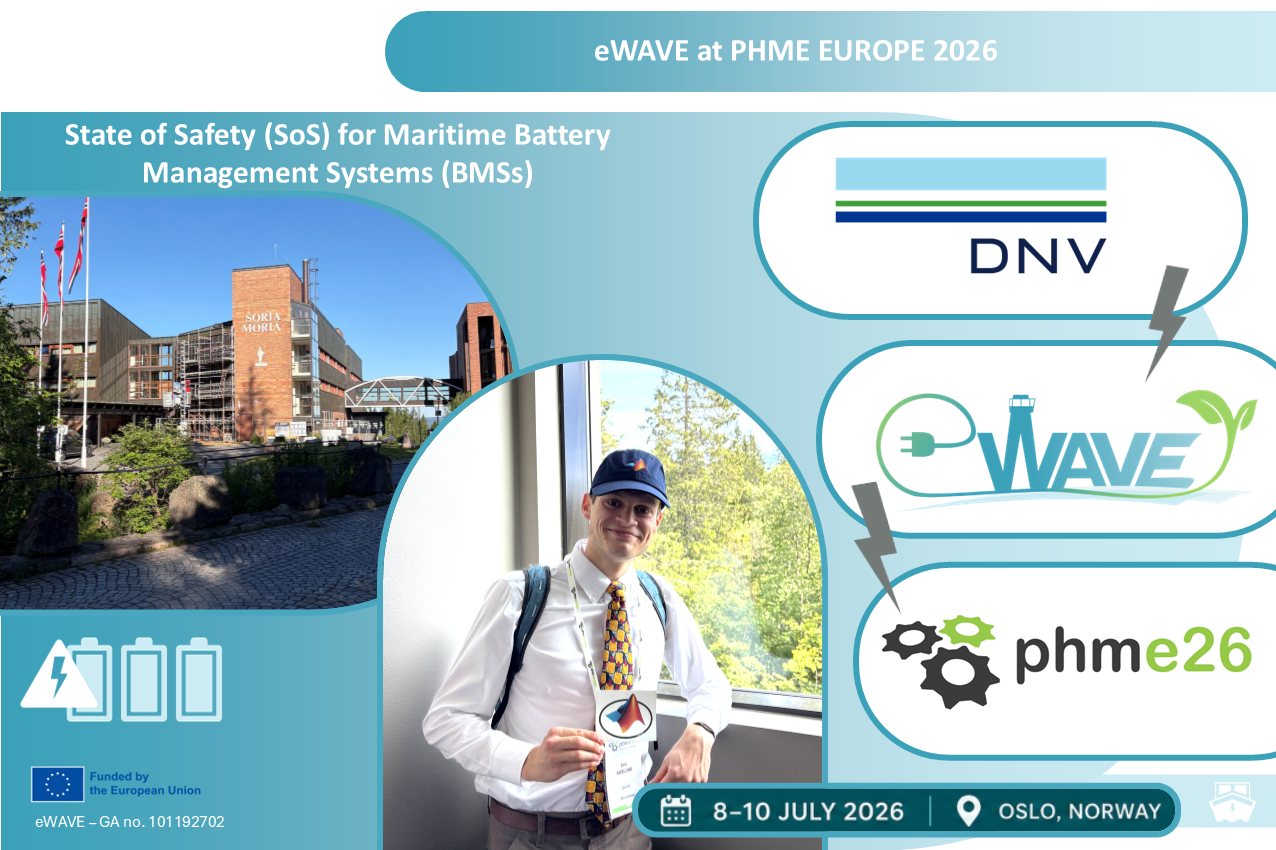
    What is the State of Safety (SoS)?

    The State of Safety (SoS) is a metric that goes beyond the established State of Health (SoH) to determine whether a battery poses an actual safety risk – during operation or at the end of its first life. It is therefore a prerequisite for reliable safety qualification throughout a battery’s lifetime. A major challenge, however, remains the absence of a shared, internationally recognized understanding/definition of SoS.

    As lithium-ion batteries from electric vehicles reach the end of their first life, repurposing them for stationary energy storage represents an attractive path towards greater sustainability. Yet a crucial question must be answered first: is an aged battery still safe enough for reuse?

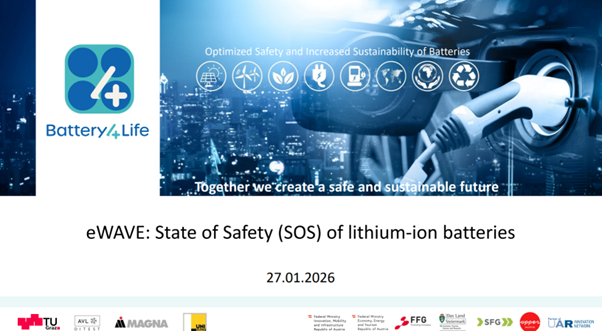
    It was precisely this issue that Dr Emanuele Michelini from Battery4Life – a COMET competence center based in Graz, Austria (https://battery4life.at/) – addressed in a presentation in January 2026, which was organized by the eWAVE partner SYRION. The entire eWAVE consortium was represented at this presentation – in many cases with several experts per partner – and took an active part in the subsequent discussion.

    From Degradation to Qualification

    Batteries degrade through a complex interplay of mechanisms — lithium plating, particle cracking, SEI layer formation, and others — ultimately manifesting in three measurable ageing modes: loss of lithium inventory (LLI), loss of active material (LAM), and increase in internal resistance (IRI), all of which may ultimately lead to safety issues. Michelini’s approach translates these degradation phenomena into a plenitude of electrical state indicators extractable from signals already available in standard battery management systems (BMS) – voltage, current, and temperature – meaning no additional specialized sensors are required.

    Tests Under Critical Loads

    To verify the safety relevance of these indicators, cells with different ageing histories were subjected to critical load scenarios identified through a Failure Mode and Effects Analysis (FMEA), including charging at high C-rates, operation at low temperatures, and mechanical shocks and indentations. Tests on standard NMC pouch cells showed that selected electric parameters shift consistently following mechanical stress – regardless of prior ageing history. This key finding forms the basis for an SoS estimator capable of classifying end-of-life batteries for second-life applications at high, medium, or low requirement levels, or flagging them for recycling.

    Outlook

    According to E. Michelini, no single parameter is sufficient: a multi-parameter approach is essential to capture the full complexity of battery ageing and assess safety holistically. The resulting framework aims to enable a real-time SoS estimator integrated into BMS hardware, contributing directly to Battery Passport initiatives and supporting safer second-life applications. Future R&D must address the lack of an internationally binding SoS definition, the transferability of findings across cell types, the mapping of ageing indicators to failure precursors and risk thresholds, and in-operando monitoring under diverse operating conditions.

    eWAVE – SoS for Maritime Applications

    In the maritime environment, SoS estimation faces specific challenges: distinct emergency response procedures, limited knowledge of maritime stressors on battery behavior, and the absence of clear requirements and standards from the IMO and classification societies, among other things.

    Eventually, eWAVE aims to develop an SoS estimation algorithm for maritime batteries, drawing on thermal runaway test data, selected electrical monitoring parameters, and additional dedicated sensor data.

    As of March 2026, Dr. Emanuele Michelini now is Programme Officer at the EC Joint Research Center.

  • The 2nd eWAVE interview and impression video

    The 2nd eWAVE interview and impression video

    We are releasing our second interview video – including Highlights of the General Assembly meeting at DAMEN!

    During meeting in Gorinchem – The Netherlands, we’ve interviewed:

    • Our project coordinator Marcel Egger of i2m
    • Our researcher Vaidehi Gosala of DLR Institute of Maritime Technologies and Propulsion Systems
    • Our research engineer Peter Rampen of the R&D department of DAMEN

    They give insight into the technology development in the eWAVE project, the first results and the impact this ambitious journey is expecting to make. Also, the consortium received a grand tour in the Lighthouse experience centre of DAMEN. The video captures the energy, passion, and teamwork that define the eWAVE spirit: Powering the Future for Electric Shipping!

    Video Credits to:

    • DLR’s animation video: Impressum DLR (CC BY-NC-ND 3.0)
    • Damen Shipyards video material

  • The 1st eWAVE interview video is launched!

    The 1st eWAVE interview video is launched!

    It is time to release our first interview video. During the kick-off meeting in Graz, we interviewed members of our coordination team Anesa Begovic and Aldo Ofenheimer, our scientific coordinator Olve Mo and Technology Roadmapping specialist Nicky Athanassopoulou.

    They give insight into the technology development in the eWAVE project and the impact this ambitious journey is expecting to make. The highlights of the project Kick-off meeting capture the energy, passion, and teamwork that define the eWAVE spirit: Powering the Future for Electric Shipping!

  • 🚀 Milestone 2 Achieved!

    🚀 Milestone 2 Achieved!

    The eWAVE project has achieved its second Milestone with the delivery of our latest deliverable D3.1. The deliverable outlines the specifications for a cutting-edge battery system designed to revolutionize the maritime sector.

    Key Highlights of the specifications are:

    • Modular Architecture with 24-series modules, ensuring scalability and flexibility for various maritime applications.
    • High Voltage Operation with a baseline that targets a string operated around 1.5 kV DC

    This deliverable sets the foundation for the development and procurement activities in the eWAVE project, paving the way for the next generation of sustainable, all-electric vessels.

    You can download the public summary of Deliverable D3.1 here

  • eWAVE Consortium Meets at DAMEN Shipyards for Second General Assembly

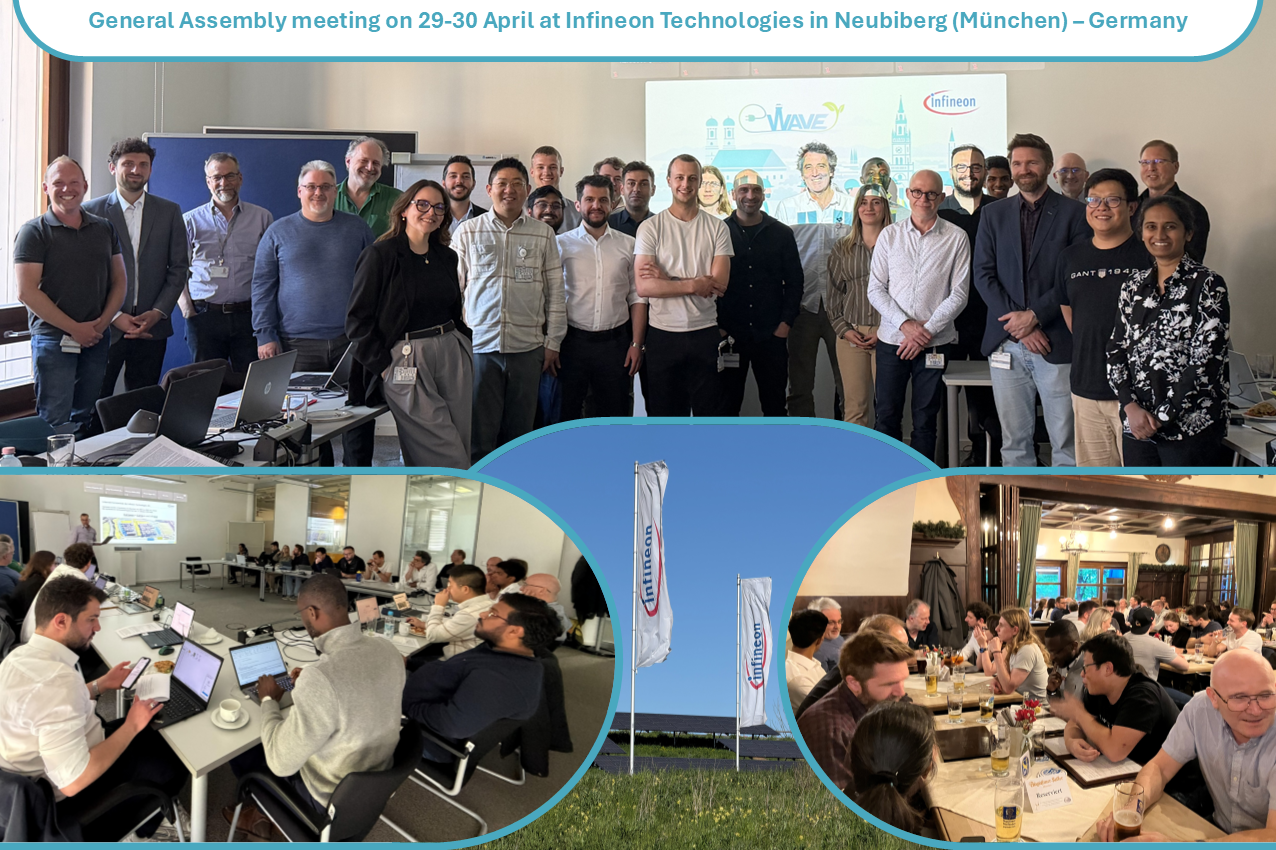
    eWAVE Consortium Meets at DAMEN Shipyards for Second General Assembly

    On 14–15 October 2025, the partners of the eWAVE Project convened at DAMEN Shipyards in the Netherlands for the project’s second General Assembly meeting, kindly hosted by DAMEN.

    The two-day meeting brought together all consortium members to review the project’s progress, share updates from each work package, and plan the next steps in the development of high-voltage, scalable, and modular battery and distribution systems for sustainable waterborne transport.

    Progress and Key Achievements

    During the meeting, partners celebrated the successful completion and submission of important deliverables, including the Market Needs & Regulation Report (D2.1) and the Requirements Architecture (D2.2). These achievements mark significant progress in identifying market demands, regulatory frameworks, and system-level requirements for next-generation electric vessels.

    Discussions also focused on upcoming deliverables, such as the Specifications of Battery System (D3.1) report, as well as ongoing work on battery design, system safety, and data management. Partners reviewed the alignment between technical work packages and outlined a coordinated path forward to ensure seamless integration across all project activities.

    Collaboration and Knowledge Exchange

    A highlight of the General Assembly was a guest presentation by eWAVE’s sister project, HARPOONERS, which shared insights into their objectives, research focus, and technological developments. This exchange further strengthened synergies between EU-funded initiatives working toward the decarbonisation of maritime transport. You can read more about our activities on project synergies and the HARPOONERS project on this page.

    Looking Ahead

    The meeting reaffirmed the consortium’s shared commitment to innovation, collaboration, and sustainability. With ongoing research and development across multiple technical areas, the eWAVE project continues to make strong progress toward its vision of efficient, high-voltage modular battery systems to power the next generation of sustainable, battery-powered vessels.

    The consortium extends its appreciation to DAMEN for their warm hospitality and to all partners for their continued dedication and teamwork.

  • eWAVE Showcased at EARPA FORM Forum 2025 — Bridging Maritime and Automotive Innovation

    eWAVE Showcased at EARPA FORM Forum 2025 — Bridging Maritime and Automotive Innovation

    At this year’s FORM Forum 2025 in Brussels, the EU-funded eWAVE project was presented to an audience of over 200 participants from academia, industry, and representatives from the European Commission, Parliament, and government who gathered to discuss “Transitioning Road Mobility: Actions to Safeguard Europe’s Competitive Edge.”

    About the FORM Forum

    The FORM Forum (Future of Road Mobility Forum) is a biennial event organized by EARPA (European Automotive Research Partners Association). It serves as a key meeting point for the European mobility research community, bringing together stakeholders from across the transport ecosystem to exchange insights on the future of sustainable, connected, and competitive road mobility.
    The 2025 edition focused on Europe’s transition toward sustainable transport systems, emphasizing cross-sector collaboration, electrification, and innovation as enablers of competitiveness in a rapidly changing global landscape.

    Bridging Road and Maritime Electrification

    Although traditionally oriented toward automotive and road transport, eWAVE’s participation underscored the growing synergy between maritime and automotive innovation. Both domains face comparable technological and systemic challenges in achieving zero-emission propulsion:

    • the development of high-energy-density, high-voltage battery systems,
    • ensuring safety, durability, and reliability in demanding environments,
    • and embedding circularity and sustainability through bio-based and recyclable materials.

    During the poster session, eWAVE engaged in lively exchanges with conference participants on how technological advances in the automotive sector can accelerate maritime electrification.


    Key discussion topics included:

    • adapting high-voltage architectures from electric vehicles to maritime systems,
    • exploring common standards and testing protocols for safety and performance,
    • and strengthening cross-sector collaboration to achieve shared decarbonization goals.

    A Shared Vision for Sustainable Mobility

    By showcasing eWAVE at the FORM Forum, the consortium contributed to broadening the mobility dialogue beyond road transport, emphasizing that the decarbonization of Europe’s transport system depends on cross-sector innovation.
    The discussions clearly showed that lessons learned in automotive electrification can inspire progress in the electrification of waterborne transport — and innovations at sea can, in turn, feed back into automotive applications.

    The eWAVE project, involving 18 partners from research, technology, and shipbuilding, is advancing efficient high-voltage modular battery and distribution systems for sustainable, all-electric vessels.
    Its integrated approach combines energy efficiency, safety, and circularity, supporting the EU’s objective of a climate-neutral transport system by 2050.

  • 🚀 Milestone 1 Achieved!

    🚀 Milestone 1 Achieved!

    We are excited to announce that eWAVE has successfully delivered its first project milestone: Deliverable D2.2 – Requirements Architecture.

    This foundational document captures the collected, balanced, and structured requirements that will guide the research, development, integration, demonstration, and evaluation phases of the project. It represents the collective work of all 18 eWAVE partners and sets the stage for the innovation journey ahead.

    The deliverable outlines:

    • Methodology for requirement elicitation, structure, and change management.
    • A comprehensive set of requirements across key areas such as:
      Battery Systems (271 requirements)
      HV Distribution & System Control (47 requirements)
      System Architecture, Sustainability & Circularity (126 requirements)
      Implementation, Integration & Demonstration (49 requirements)
      Techno-economic & Ecological Evaluation (44 requirements)
      • Plus 35 requirements covering overall project objectives.

    Together, these requirements form the backbone of eWAVE, ensuring the reliable interaction of hardware, software, and innovative concepts in the future demonstrator vessel. You can download the public summary of Deliverable D2.2 here

  • eWAVE presentation at Solid4B cluster workshop

    eWAVE presentation at Solid4B cluster workshop

    on 17 September 2025, Mohsen Akbarzadeh of Flanders Make represented the eWAVE project in the Solid4B Cluster workshop on the future of solid-state batteries.

    In the workshop, Mohsen participated in the round table discussion and presented “A Maritime perspective on application of Batteries to Power the Future of Electric Shipping”, revealing the highlights of our first result: deliverable 2.1 – Market Needs & Regulation Report. Curious for more? Feel free to read the full report

    You can also watch this video, created by the PULSELiON project, for an impression of this electrifying event: https://project-pulselion.eu/pulselion-hosts-the-solid4b-cluster-workshop-on-the-future-of-solid-state-batteries/

    A heartfelt thanks to the engaged audience, to the other speakers and the organizing comite (PULSELiON and PNO Innovation België) for making it a great event!

  • eWAVE project flyer available

    eWAVE project flyer available

    Check out the official project flyer of the eWAVE project. Download is here, or have a look at the other downloads in our media kit.